Ramadan: The Time When Hearts Gather Around the Same Table
The greatest strength of these lands lies in the hearts of its people.
Davut Güloğlu
2/19/20264 min read
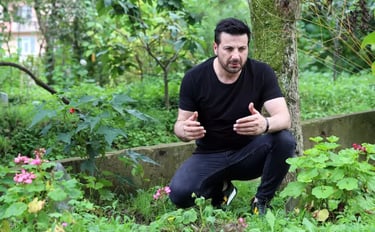
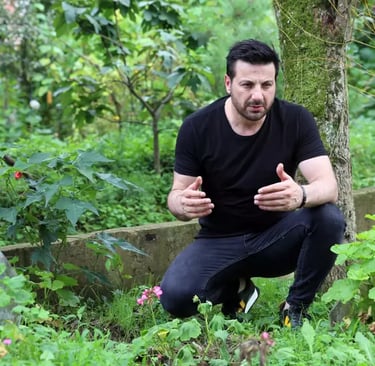
Hello, I am Davut Güloğlu.
Throughout my nearly thirty-year artistic journey, I have always felt one truth deeply: the greatest strength of these lands lies in the hearts of its people. Our people know how to share both sorrow and joy. When a folk song is sung and everyone gathers around the same feeling, there is a reason for it. It is because solidarity, loyalty, and brotherhood are rooted in the very spirit of this nation.
The month of Ramadan is one of the times when these feelings appear in their strongest form. Since my childhood, I remember how a special excitement would begin in the neighborhood as iftar time approached. The smell of food would rise from the houses, tables would be prepared, and a plate would always be sent to a neighbor. Because in our tradition, the blessing of the table grows when it is shared.
As a son of the Black Sea, I learned something important in the home where I grew up: Ramadan is not only about staying hungry. Ramadan is a month in which the heart is refined. During this time, people reflect on themselves, listen to their conscience, and think about their mistakes. It is not the stomach that is truly disciplined, but the human ego.
That is why Ramadan is not only a month of worship; it is also a time when the spirit of society is renewed. During this month people greet each other more warmly, the estranged make peace, and doors are knocked on more often. When you are invited to an iftar table, you are not simply invited to eat; you are invited to share hearts.
This is exactly where art finds its place. Because the essence of art is to express human emotions. When I sing a folk song on stage, sometimes I see tears in people’s eyes and sometimes a smile on their faces. Music is an invisible bridge that connects the hearts of people.
During Ramadan, this bond becomes even stronger. A hymn, a melody, or a folk song played at an iftar table reminds people of something important: life is not only about rushing through our days; life is also about pausing and listening to our hearts.
I have always believed that traditions are the memory of a society. If we lose our traditions, we begin to lose who we are. From the Ramadan drummers to iftar tables, from visiting neighbors to late-night sahur conversations, every tradition reminds us of one truth: we are not individuals living alone; we are a society sharing the same destiny.
Our elders used to say: “Even sharing a single piece of bread during Ramadan brings hearts closer.” There is great wisdom in that sentence. Because sharing is not only a material matter. Sharing is the expansion of the human heart.
Throughout my artistic life, I have tried to carry these values into my music. The sound of my kemençe has sometimes shared the joy of a wedding and sometimes expressed the sorrow of separation. Yet I have always felt the same thing: in the folk songs of this nation, there is not only music but a philosophy of life.
The month of Ramadan is perhaps the most beautiful reflection of this philosophy. During this time, a person does not think only about their own table; they also remember their neighbors, the poor, and those who have no one. Perhaps this is the greatest beauty of Ramadan: bringing people’s hearts closer to one another again.
Today the world is changing very rapidly. Technology advances, cities grow, and the pace of life accelerates. But within all this change, there is one truth we must never forget: what makes a human truly human is the heart. Ramadan reminds us of this.
To my younger brothers and sisters, I would especially like to say this: never underestimate your traditions. Within those traditions lies the wisdom of centuries. Sitting at an iftar table with your elders, knocking on a neighbor’s door, or helping someone in need may seem like small acts, but in reality they are the values that shape the character of a society.
When I receive applause on stage, the question I ask myself is simple: have I been able to touch people’s hearts? Because the true purpose of art is not merely to receive applause. True art awakens the goodness within people.
Ramadan does the same. During this month people become more patient, more compassionate, and more thoughtful. Because the spirit of this month teaches us one essential truth: a person does not live only for themselves.
In our civilization, tables are large. Because around those tables, not only food is shared but love and fellowship as well. People sitting side by side at an iftar table are in fact saying “amen” to the same prayer.
My wish is this: during this Ramadan, may our hearts grow closer to one another. May resentments turn into forgiveness, and loneliness turn into friendship. Because peace and brotherhood grow strongest in times like these.
Throughout my artistic life, I have seen something remarkable: sometimes people embrace each other through a single song. That is why I believe in the power of art. Art softens hearts and removes the walls between people.
Ramadan does the same. It brings people together around the same table, in the same prayer, and within the same hopes.
As an artist, as a son of the Black Sea, and as a member of this society, I truly believe that as long as we keep our values alive, our future will remain strong.
Because faith keeps the heart standing, tradition keeps society standing, and art keeps the spirit of that society alive.
Ramadan reminds us of this once again.
And I believe that a society that prays at the same table and sings the same songs will always walk toward a future filled with hope.